


The Ice Miner by Zeph Watkins
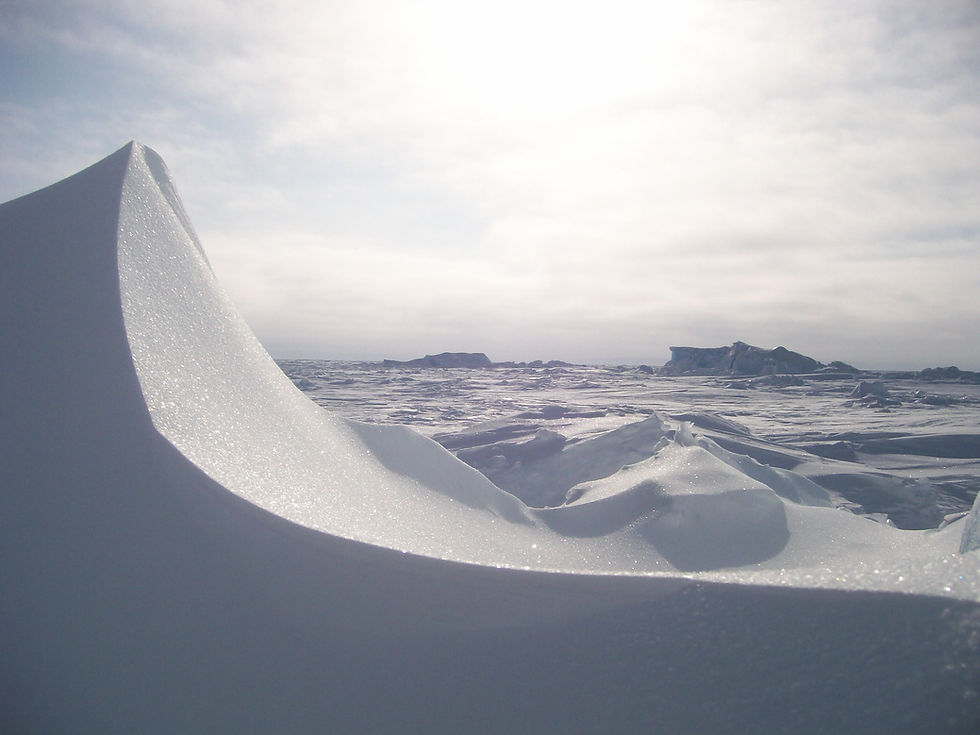
When I was young and alone and struggling through winter’s wallows, I used to lie on the couch and watch the ice miner through the window. He would pass from one curtain to the other, his back arched as he leaned forward to slide his sled of tools across the snowy plain. Later, he would bring back ice. It would glisten in the sun atop his sled. Sometimes he made the journey twice a day, sometimes many more; back and forth, back and forth, drifting through the frame my curtains made, withstanding wind that whipped snow like waves; back and forth, back and forth.
In the times between his journeys, with my eyes ambling between sleep and reality, I imagined his life. I walked across the vast plain where mountains surrounded me like walls; I sawed and heaved heavy ice-blocks onto the snow; I traversed through staggering blizzards, or wandered clear starry nights. I imagined a fantastical land, though the true one never lay more than a step from where I slept.
Then, from the kitchen, my mother would call my name for dinner. At the table, my muted answers quieted her questions.
Afterwards I would find myself back at the couch to see his journey home. He would tow ice past the curtain’s flank for the day’s final venture, the sky’s edge turning gold to pink with a lone cloud peering over the horizon. After he passed, I would lay on the couch as darkness dawned and the stars bloomed. A fire would rest its flames in the iron stove behind me, exhaling embers as it turned its head to find comfort on its bed. Upstairs, the wood of my mother’s room would creak, snow drifting past her window to settle to mine below. The night would silence into winter’s solemnity. And, with my eyes half closed and half into dream, I would watch the stars as I was swept to sleep.
One morning I thought I awoke.
I sat up from the couch and rubbed my eyes. The fire in the corner of the living room was dark. My mother and I kept the stove heated constantly on those winter days, but this morning I did not light it again. I did not find it particularly cold. Instead I stood, and with my hand against the archway next to the iron stove, I looked for my mother in the kitchen. But she was not there. There was only a half-set table over which dust floated undisturbed, and the rocky wall where pots hung as if they had never been moved: an empty, lifeless room. I left. There were only two other rooms in the house, my mother’s bedroom and mine; and I walked through the living room to the stairs and the bare hallway of the second floor. I looked into her bedroom from the doorway. Though bright and lit unlike the kitchen, it stood empty as well: curtains hung limp; books on shelves lounged stagnant; sunlight drifting air. Calmness prospered so dominantly, I thought it must have been manipulated by some motive less sincere.
Through the flanks of the curtains, I saw the ice miner walking across the plain. I hurried down the stairs and out the door to join him.
The snow blinded me. I looked down to my feet. I felt it between my toes. It crinkled as it cracked. I felt the air. It was cool. I was not cold. I did not feel cold nor warm at all; instead, I felt perfectly myself on the bright, sunny, winter day, which held not a cloud in the sky, nor a gust of wind to blow snow across the plain. Even my toes were not cold. They just felt the snow’s melt between them.
I turned back and saw my house. I did not like what I saw. It was not the place to be, so I began towards the black speck of the ice miner.
Next to him, the sled, tools like a push-broom and pike-pole, a bag for his lunch, all lay scattered across the ground. He cut the ice easily, pulling his saw nearly all the way out, and then with a straight back, returning it into the ground. Water lapped at the cut’s edge like welling tears, only to find courage and shrink back into the plain. Another cut would make it cry once more. He sawed a long line, walking backwards past me as he did. When he finished, he returned to the front of his line, and began on the other side.
I had to run away from my home, I told him.
Why else would you have a place to stay, he said, if not to run into an ice field?
He continued cutting. He pulled his saw nearly all the way out, and he pushed it back in.
The field was a perfect, blinding white. I wondered where all of his previous extractions had been. Barefoot, I walked across the snow, but I could find no mark of his previous cuts. I kicked the powder to look for the ice underneath, but no matter how much I kicked, I could never find what I was looking for.
I had wandered a long way from the miner. I turned, blinking, and saw him in front of me: shrunken eyes hidden behind a sinuous beard and the creases of wrinkles. In his hand he held a chisel.
Not yet, he said.
Then, with the chisel, he struck the ice next to me. It shattered, and water cried out. Cracks rippled along the surface in a perfect rectangle.
In winter, where ice has been cut, more will grow.
He handed me the chisel, and we walked back to where his tools lay on the ground.
I stood by the section he had just cut with the chisel in my hand, and I chopped blocks along the grooves he had already made. The ice splintered easily, but I was scared to strike my feet, and I kept moving them back, which made me slip as I swung. He was sitting on his sled. He used his feet to slide himself back and forth as he watched me. I dropped his chisel, tired. He continued to slide, back and forth.
You don’t say much, I told him.
That’s not how you mine ice, he said.
I don’t want to mine ice.
You ran away from home to an ice field.
That doesn’t mean I wanted to do this.
The sled slid back and forth. He looked beyond me to the mountains.
The sky was an empty, gelid blue. A breeze blew, and I shivered.
After some time he stood and cleaved the ice himself. He did not slip, for he would not strike his feet. He pulled the blocks out with his pike-pole. They waited on the ground and wept in the sun. I looked at the holes they left behind.
The ice looks so thin, but the blocks are so big, and the water comes right up to the surface.
The water is always closer than we think, the ice larger than we expect.
Another gust of wind blew, this one stronger. I shielded myself as the snow swept across the plain.
My feet are getting cold.
You ran from home to an ice field. You ran so quick you forgot your shoes. You don’t even want to mine ice.
The wind blew again. Snow surrounded us, and I shielded my face and crouched down as it bit into me. Piercing, stabbing, shedding each layer of skin that came out to protect the last; tattered like flower petals in hail. Then it left. The day was clear, the ice blocks wept in the sun, and I felt warm. I shuffled my feet back and forth in the snow.
I went over and picked up his pair of tongs. I grabbed the blocks, and hauled them onto the sled.
Why do you cut ice?
It is winter. There is ice.
Where does it come from?
From ice.
From the cold?
From holes.
I finished hauling the ice. The miner unpacked his lunch. The sun had not moved since I first came out.
The wind blew again. I sheltered myself, and when I stood, the miner was eating a sandwich.
He must be used to it, I thought.
Are you going to mine anymore?
He took large bites from his sandwich, washed them down with his drink. I sat on the ice.
In the distance I saw the mountains of the valley. They were beautiful, but I was disappointed. What I saw was not what I had imagined from the couch. And I was bored, for now there was nothing left to imagine.
Why do you mine ice? I asked, and turned.
The miner stood next to me, the chisel in his hand.
Go home.
He smashed the ice under me. I fell into the water, and darkness engulfed me, lit by a sun that yearned to look through ice.
I awoke on the couch in a cold sweat.
A morning glow shone through the window; the fire rose and mumbled in the corner. In the kitchen, my mother clunked a spoon against a pot as she hummed to herself. I panted on the couch, wiping sweat from my forehead.
“You awake, Kye?” my mother asked. “Breakfast soon?”
Outside the window, the ice miner walked across the vast snowy plain. Wind blew over his hunched back.


Comments